

Overconsumption, or simply consuming what you don’t need, is at the root cause of poor financial well-being. While, from an economic standpoint, it has been proven that austerity is not an effective government strategy, there is a type of austerity that may come to your rescue. Keynesian economics recognizes the paradox of thrift, which holds that if every individual were to become thrifty, the economy would enter a recession due to a lack of demand for goods and services. While Keynes is correct, in the modern day this surplus from individual thrift has resulted in asset bubbles like those you see in the stock and real estate markets because, instead of just saving, thrifty people are investing. I’m under the impression you would like to participate in this investing rhythm, which can greatly improve your liquid capital.
One such strategy for improving or establishing your surplus is through personal austerity. Personal austerity involves identifying your objectives and then achieving them as efficiently and cost-effectively as possible. For example, eating fast food does provide nourishment and fuel for the body, but often in excess. Scientifically speaking, you only need a certain number of calories per day to function, and you definitely need nutrients more than you need calories. Therefore, a rational economic actor practices personal austerity by spending money only on food and nutrients that are necessary for a healthy, well-functioning body. Money spent on anything in excess is potential surplus the actor can capitalize on and accumulate.
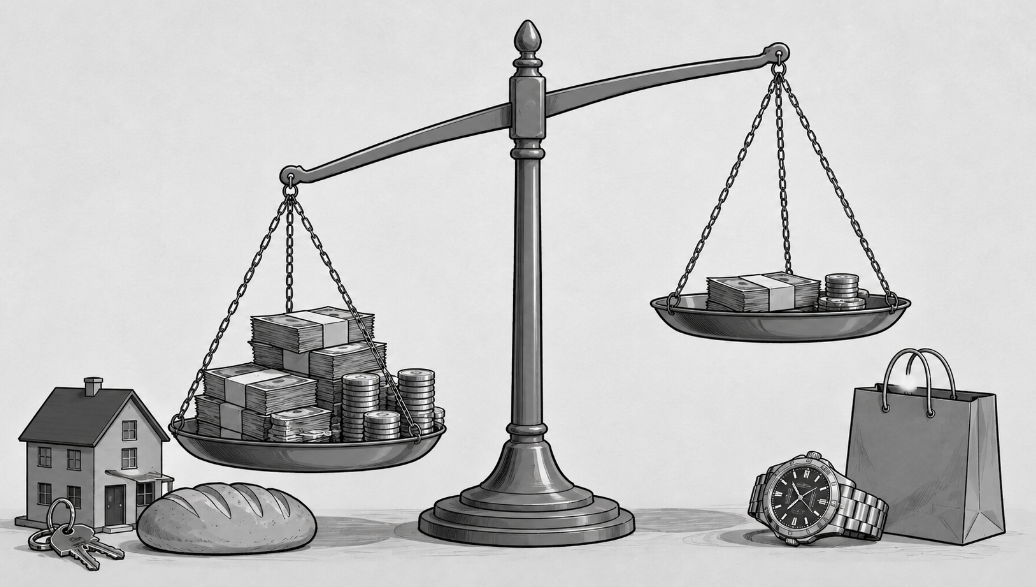
The rational economic actor does not just look at the benefits the new shiny iPhone may bring them but instead asks at what cost. An additional $400 spent for a smartphone that is only a year newer may be a costly tradeoff for features and benefits that may not justify the cost. Austerity is not desire renunciation, it’s strategic desire management.
In summary, personal austerity is the practice of choosing the essential. Humans are known to have unlimited desires, but personal austerity is about recognizing those desires and prioritizing the most important and sound ones over the frivolous and unnecessary ones.
